
More Than Manners: The Unwritten Rules That Shape Dining in Singapore
Long before the food arrives, a meal in Singapore has already begun. Not with a reservation confirmation or a menu, but with a small ritual so familiar that most people hardly notice it anymore.
The Seat Saved by a Tissue Packet
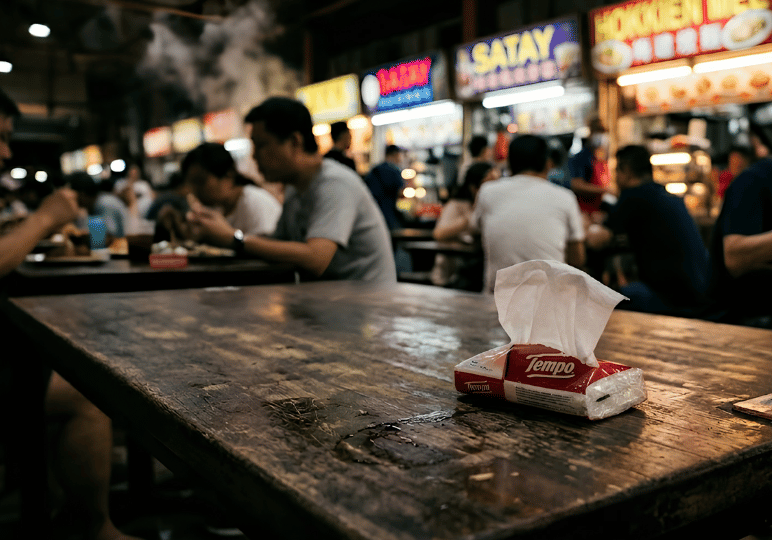
A packet of tissues placed carefully on a chair. A lanyard draped over a table. A folded umbrella resting where a diner intends to sit. Within seconds, everyone understands the message: this seat is taken.
To visitors, the practice can seem unusual. To locals, it barely requires explanation. Reserving a seat with a simple object is one of the many unwritten rules that quietly shape how Singaporeans dine. These customs are rarely discussed, yet they are passed along through observation, repetition, and everyday participation.
Perhaps that is because dining here has never been only about food.
The Pause Before the First Bite
In many Singaporean families, there is often an unspoken pause before anyone starts eating. The dishes may already be on the table and the food may still be steaming, yet younger family members wait.
Not because they are instructed to, but because they understand.
The eldest person at the table takes the first bite. The gesture lasts only a few seconds, but it carries a deeper message about respect. It reminds everyone that a meal is not merely individual, but shaped by relationships beyond the table itself.
When the Meal Belongs to Everyone
The same spirit appears in the way dishes are ordered. In Singapore, meals often revolve around sharing. Families order several dishes for the table. Friends debate what everyone should try. Even casual dinners become exercises in negotiation, compromise, and collective enjoyment.
The meal belongs to the group.
Food becomes a communal experience, where one person recommends a favorite dish and another insists everyone try a particular specialty. Plates move across the table as conversations continue. The sharing of food becomes another form of conversation.
The Gentle Ritual of the Bill
Even the question of who pays carries its own set of expectations. One person reaches for the bill first. Another protests. A brief exchange follows, sometimes sincere and sometimes ceremonial.
The outcome may be to split the bill, pay digitally, or let one person cover the meal, but the gesture matters. It is less about money than it is about signaling care.
The Quiet Order of the Hawker Centre
Perhaps nowhere are these customs more visible than in hawker centres. People queue patiently. Strangers share tables when seating is limited. A tissue packet can reserve a seat because everyone collectively agrees to honor the system.
There is trust in that arrangement. The object itself holds no authority. The understanding comes from the people around it.
How We Learn Without Being Told
What makes these unwritten rules fascinating is that few are ever formally explained.
Children learn them by watching parents and grandparents. New residents absorb them through repeated encounters. Over time, what once seemed unfamiliar becomes instinctive.
The customs become invisible precisely because they are so widely understood.
Why These Small Rituals Still Matter
These unwritten rules matter because they remind us that dining is never entirely individual. Whether it is waiting for an elder to begin eating, offering a dish to someone else, or respecting a packet of tissues on an empty chair, each gesture contributes to a larger sense of belonging.
The food may be the reason people gather, but these unwritten rules help explain why the gathering feels meaningful.
They transform a collection of tables into a community, and a simple meal into something that reflects how people share space, show respect, and care for one another. The stories behind Singapore's restaurants extend far beyond any single meal. Explore more reflections, guides, and dining experiences on our homepage.