
The Human Side of Restaurants That Social Media Cannot Capture
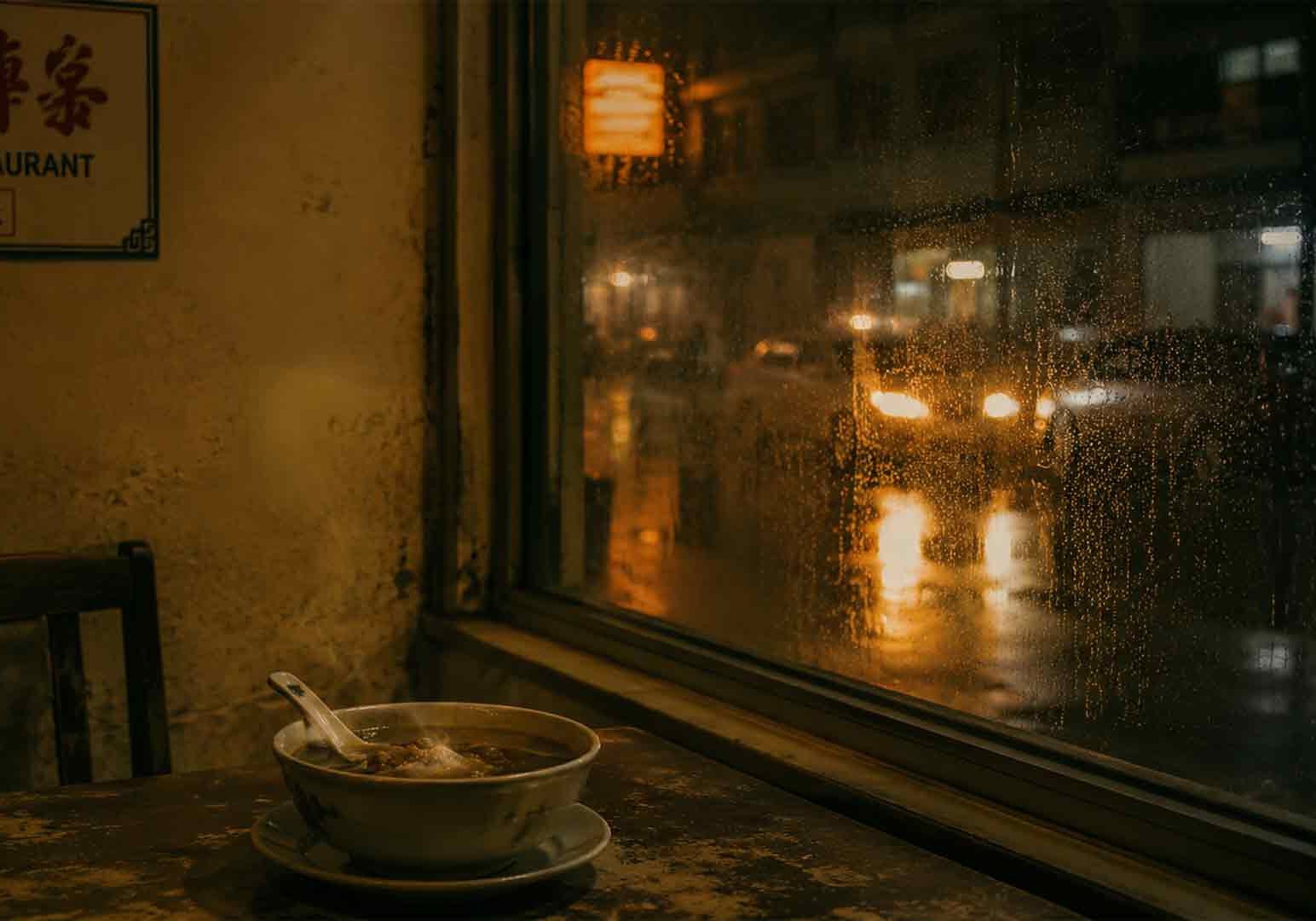
A few months ago, I found myself inside a small Teochew restaurant tucked along a quieter stretch of Balestier Road. It was raining heavily outside, the kind of steady Singapore rain that softens the city into reflections and blurred headlights. Inside, the dining room remained almost unchanged from what it must have looked like twenty years ago — cream-colored walls, aging wooden chairs, a ceiling fan rotating lazily above half-filled tables.
Nothing about the restaurant appeared designed for visibility online. The lighting was too dim for photographs. The plating was simple. There was no dramatic dry ice, no exaggerated cheese pull, no carefully curated mural waiting beside the entrance.
And yet, it was one of the most memorable meals I had all year.
Social media captures food exceptionally well as an object. It records texture, color, movement, and spectacle with impressive efficiency. What it struggles to preserve is atmosphere — the quieter emotional architecture surrounding a meal.
It cannot fully capture the comfort of being recognized by a longtime server before speaking. It misses the subtle pause between courses when conversation settles naturally into silence. It does not preserve the feeling of warmth that arrives when soup is placed on the table during a rainstorm outside.
Good restaurants are rarely memorable because of a single visual moment. They endure because of accumulated human details.
In Singapore especially, some of the city’s most meaningful dining experiences still exist beyond the rhythm of viral attention. While conversations around Top Singapore Restaurants often focus on newly opened concepts and visually striking interiors, many of the places that quietly shape the city’s dining culture remain neighborhood institutions built on familiarity and trust rather than spectacle.
These restaurants live inside older corners of Toa Payoh, Katong, or Balestier, where recipes remain largely unchanged and hospitality is expressed quietly rather than theatrically.
There is also a difference between a restaurant designed to be photographed and one designed to be returned to. The former often prioritizes immediate impression. The latter understands something more difficult: consistency, familiarity, and emotional ease.
Perhaps that is why certain restaurants continue to stay with us long after trend cycles move on. Not because they demanded attention, but because they allowed us, however briefly, to feel grounded within the simple act of sharing a meal.