
The Stranger Who Sat Across From You
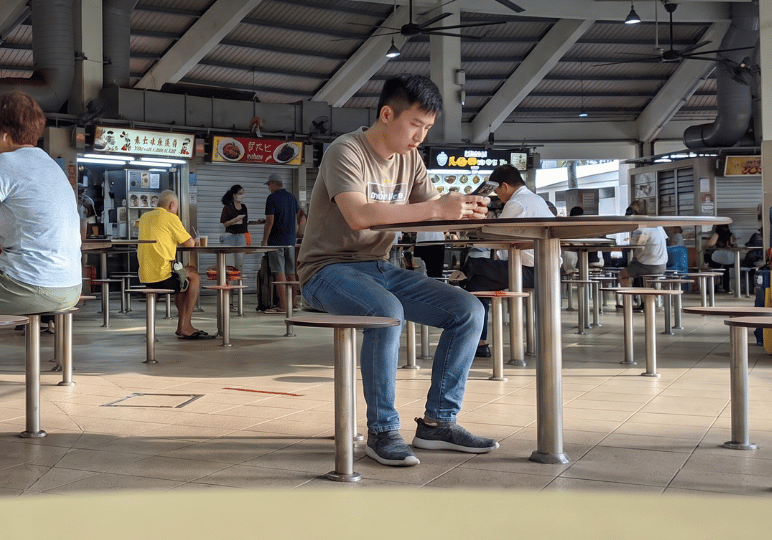
In a crowded hawker centre, an empty seat rarely stays empty for long.
You place your tray down, make space for your drink, and before the first bite, someone appears beside the table. A brief question follows.
“Can sit?”
You nod. They sit.
For the next twenty minutes, two lives share the same small surface.
There is something deeply Singaporean about this arrangement. It is practical, certainly. Tables are limited, queues are long, and lunch does not wait for perfect privacy. Yet beneath the efficiency is a quiet understanding that public space can be shared without becoming uncomfortable.
The stranger does not need to become a companion.
They may eat quickly, answer a message, or unfold a packet of tissues beside their plate. You may notice what they ordered, hear part of a phone call, or shift your bowl slightly so both of you have enough room.
Nothing more is required.
The Etiquette of Making Space
Shared tables work because everyone understands the boundaries.
You do not take more room than necessary. You keep your belongings close. You acknowledge the other person without insisting on conversation. The courtesy is small, but precise.
It is a kind of social cooperation that rarely receives attention because it happens so naturally.
In other dining cultures, sharing a table with a stranger may feel unusually intimate. Here, it can be part of an ordinary afternoon. The table is not owned by the first person who sits down. It belongs, briefly, to whoever needs it.
Making space becomes a form of respect.
Close, but Not Familiar
There is an unusual balance in sitting across from someone you do not know.
You are close enough to notice the steam rising from their soup, yet distant enough to remain inside your own meal. The arrangement creates proximity without expectation.
Sometimes a small exchange occurs. Someone passes the chilli. A tray is moved to make room. A quick smile follows when both diners reach for the tissue packet at once.
Most of the time, the encounter ends without names.
The stranger finishes first, clears their tray, and disappears into the crowd. Another person may take the seat minutes later.
What the Shared Table Reveals
Hawker centres are often celebrated for their food, affordability, and variety. Yet their deeper character also lives in these ordinary negotiations between people.
The shared table asks diners to practise consideration in real time. It reminds us that public life depends on countless small acts of adjustment, most of which go unnoticed.
A seat is offered. A bag is moved. A little room is made.
Trust does not always arrive through conversation. Sometimes it begins with a nod.
Perhaps that is why these encounters stay quietly meaningful. They show how strangers can share space without needing to share a story.
For a short while, both diners belong to the same table.
Then the meal ends, the seat empties, and each person returns to the city carrying no more than they arrived with, except perhaps the faint reassurance that there is still room for one another.
For more reflections on Singapore’s dining culture, visit our homepage.