
What Makes Soup Curry So Addictive?
Some meals are celebrations; others are quiet moments of refuge.
I often find myself seeking the latter after a long day in Singapore, when the city's relentless pace leaves me craving something to soften the edges.
It’s on these evenings that I don’t want a culinary adventure, but a gentle return to myself.
And more often than not, that return comes in the form of soup curry.
I came to it slowly, almost by accident.
The first time I ordered it, I expected the thick, familiar gravy of Japanese curry.
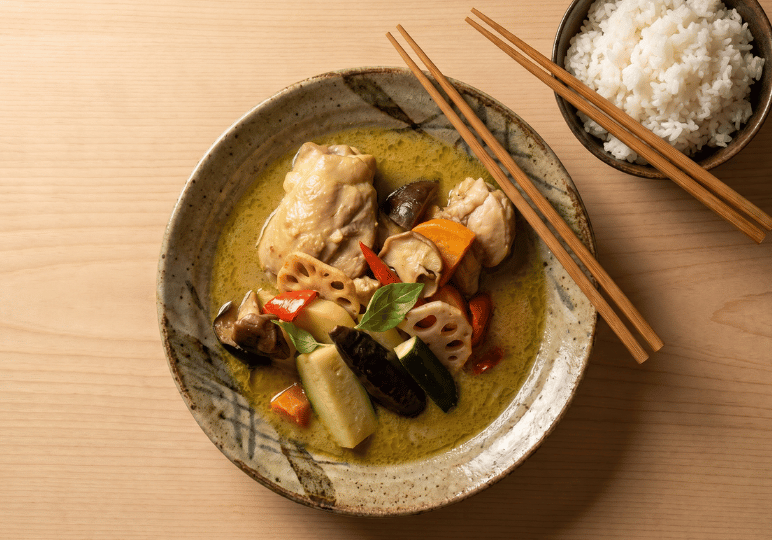
Instead, what arrived was a wide bowl of amber-coloured broth, steam rising in slow, fragrant ribbons.
It was a dish with Hokkaido roots, I later learned, built on an entirely different philosophy.
This wasn't a sauce to coat rice, but a spiced, drinkable broth so light it felt restorative by its very nature.
What makes it so addictive is its depth, achieved without a trace of heaviness.
The broth is a complex tapestry of flavours—cumin, a whisper of cinnamon, and a gentle, blooming heat.
It warms you from the inside out, but the finish is clean, inviting you to lift the bowl and drink it down to the last drop.
The experience is about appreciating these unfolding layers, a stark contrast to the singular, bold punch of other curries.
The vegetables, too, play a leading role.
They aren't mere afterthoughts but essential characters in the story.
A roasted half-cob of corn, a tender chunk of pumpkin, and crisp green beans are arranged with intention, each one a vessel for the broth.
With every spoonful, they absorb the spiced liquid while releasing their own natural sweetness back into it, creating a meal that subtly evolves as you eat.
It’s a quiet, delicious conversation happening right in the bowl.
This focus on balance and seasonality is a hallmark of Japanese comfort food, a small taste of Hokkaido’s slower rhythm without leaving the city.
Perhaps its most compelling quality is the way it encourages you to slow down.
With the rice served separately, you naturally fall into a gentle rhythm: a spoonful of broth, a bite of rice, a piece of soft-stewed daikon.
It’s a dish that resists haste.
Making it a perfect companion for dining alone.
In these moments, I never feel lonely.
The meal itself keeps me company, its warmth and complexity filling the space that conversation might otherwise occupy.
It’s a form of delicious meditation, a quiet refusal of the need to fill every moment with digital noise.
So, what makes soup curry so addictive?
It’s not a single ingredient or a secret recipe.
It’s the emotional comfort found in a bowl that asks for nothing but your quiet attention.
It’s the layered, drinkable broth, the purposeful vegetables, and the spices that bloom rather than attack.
It’s the feeling of being transported, just for a little while, to a calmer, more restorative place.
It’s a meal that doesn’t just feed you; it slows you down, warms your soul, and gently brings you back to centre.